
Using theatre and creativity to prevent Violence Against Women and Girls (VAWG)
If we're serious about ending violence against women and girls, we need to start with prevention, and educating young people as early as possible is a great place to begin. It’s important to give young people the chance to have open, non-judgemental conversations about respect, relationships and equality in ways that engage them. We must help boys and young men understand the positive role they can play without feeling they're being blamed.
And that's exactly what Breaking Barriers is doing. In this guest blog, Artistic Director Parvez Qadir shares how theatre and creativity can help young people engage with the issue of preventing violence against women and girls. Through their touring production Blind Side, they are showing how having honest conversations in schools about these topics, which can sometimes be difficult to approach, can be made possible by using theatre to open conversations.
Developed with Tameside Council, a White Ribbon UK Accredited organisation, Blind Side brings together schools, actors and local organisations to educate young people and encourage allyship from a young age.
Guest blog By Parvez Qadir, Artistic Director, Breaking Barriers
When we talk about preventing violence against women and girls (VAWG), the conversation often focuses on responding to harm after it has already happened. While support services, safeguarding measures, and crisis interventions are essential, prevention requires us to start much earlier. It calls for us to engage young people before harmful attitudes become embedded, create spaces where difficult conversations can happen safely, and empower communities to play an active role in building a culture of respect.
VAWG cannot be addressed by a single organisation, sector, or intervention. It needs a whole-systems approach that brings together schools, local authorities, community organisations, families, young people, men and boys. Everyone has a role to play in creating safer communities.
Power of theatre
At Breaking Barriers, we believe creativity has a unique role within that system. Theatre has the power to engage young people emotionally, create empathy and spark conversations that might otherwise feel uncomfortable or difficult to start. While young people are constantly receiving information, it is stories that often stay with them. Theatre creates a shared experience, allowing audiences to step into someone else's world and reflect on the choices, behaviours and pressures that shape it. When combined with discussion and education, it becomes a tool for awareness, prevention and social change.
Blind Side
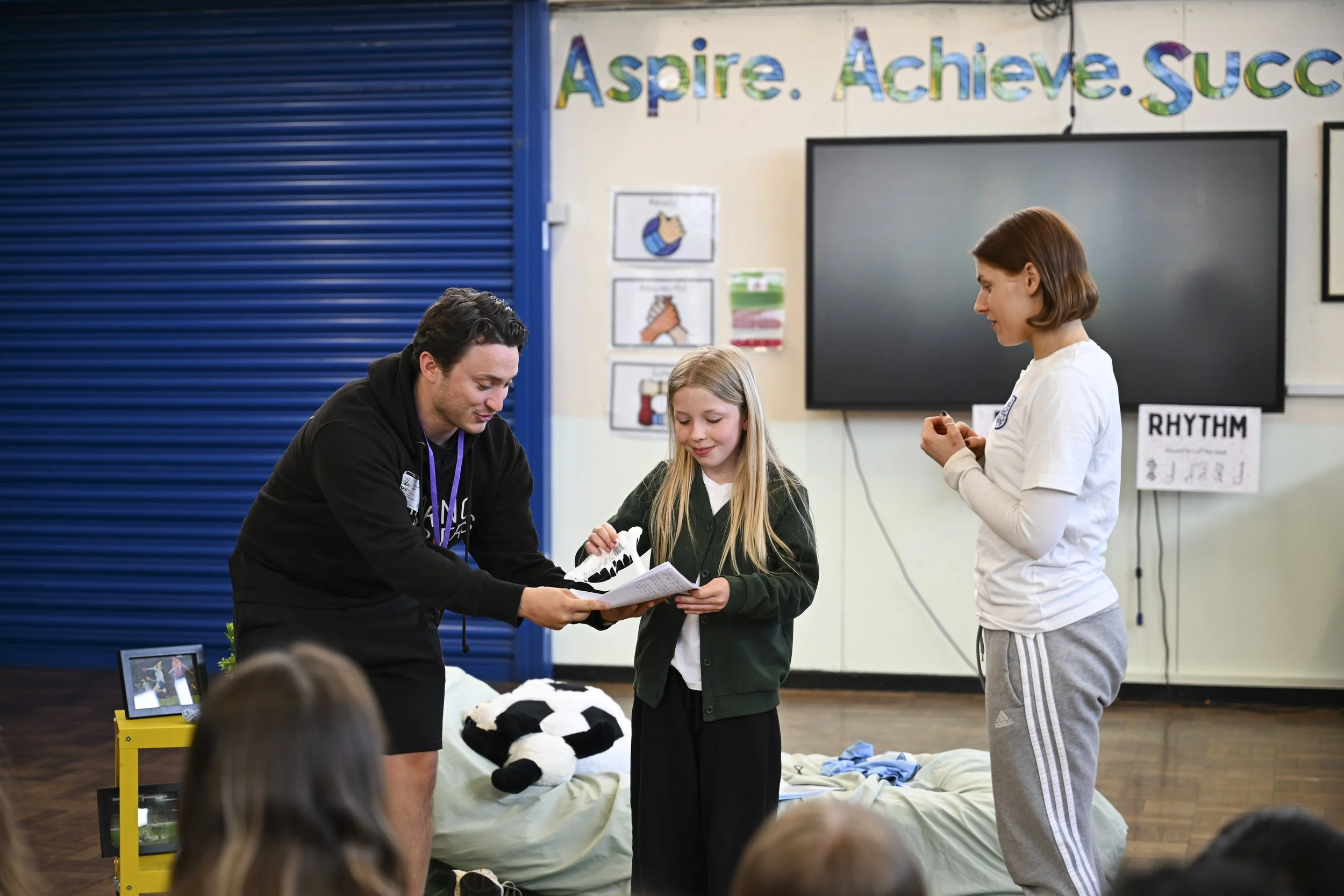
This belief sits at the heart of Blind Side, our theatre initiative designed to support awareness and the prevention of VAWG. The Blind Side performance is a 20-minute live monologue following Summer, who is the only girl on her school football team. Through her story, pupils gain insight into the impact of negative messages and harmful behaviour from peers she once trusted. The performance is supported by a wider package including a pre-session film, guided discussion and follow-up classroom activities, enabling schools to continue healthy conversations around VAWG, controlling behaviour and misogyny beyond the initial session.
Co-Creation
One of the reasons the programme has resonated so strongly with schools and young people, is that it was not created in isolation. From the very beginning, co-creation was central to our process. Blind Side was developed alongside more than 1,000 young people in Tameside, who shared their experiences, observations and concerns around friendship groups, peer pressure, relationships, gender expectations and social media. They told us what they were seeing and experiencing in their everyday lives, what conversations were missing, and what would make them pay attention. The themes explored within Blind Side feel authentic and relevant because they are grounded in real experiences. Young audiences recognise the situations being portrayed because they have seen similar dynamics within friendship groups, online spaces and school environments. That relatability is critical because when young people see themselves reflected in a story, they are more likely to engage with the messages behind it.
Allyship
Importantly, Blind Side is also about encouraging allyship. A key aim of the production is to help boys and young men understand the important role they can play as allies. Through facilitated discussion following the performance, students are encouraged to reflect on how they would respond if they witnessed harmful behaviour and what it means to challenge inappropriate language or actions among their peers. These conversations help young people understand that creating safer communities is everyone's responsibility. Real change happens when people feel confident enough to speak up, support others and challenge harmful attitudes before they escalate.
The impact of this approach has been significant. Since launching in 2024, Blind Side has reached more than 4000 young people across Greater Manchester and engaged over 60 schools. Evaluation data shows that following the programme, there was a 38% increase in understanding of what VAWG is and the signs to look out for what makes an unhealthy relationship.
The arts are not always recognised as part of the solution to major societal challenges. Yet our experience shows that creativity can be one of the most effective ways to engage young people in meaningful conversations. We must continue investing in approaches that place value in creativity and approaches rooted in lived experiences.
If you’d like to know more about Breaking Barriers, take a look at our website or email us at: hello@breakingbarriersrochdale.com
Credits:
Director Parvez Qadir; Writer Nicola Schofield; Dramaturg and Writer Mary Cooper; Producer Jodie Ratcliffe; Actress Mia Gibson; Facilitator Nathan Lea; Sound Designer Tariq Emam.
With thanks to Tameside Police, Tameside Borough Council and all of the schools and organisations who have guided the creation of this piece through workshops, focus groups and discussions on the topic of VAWG.